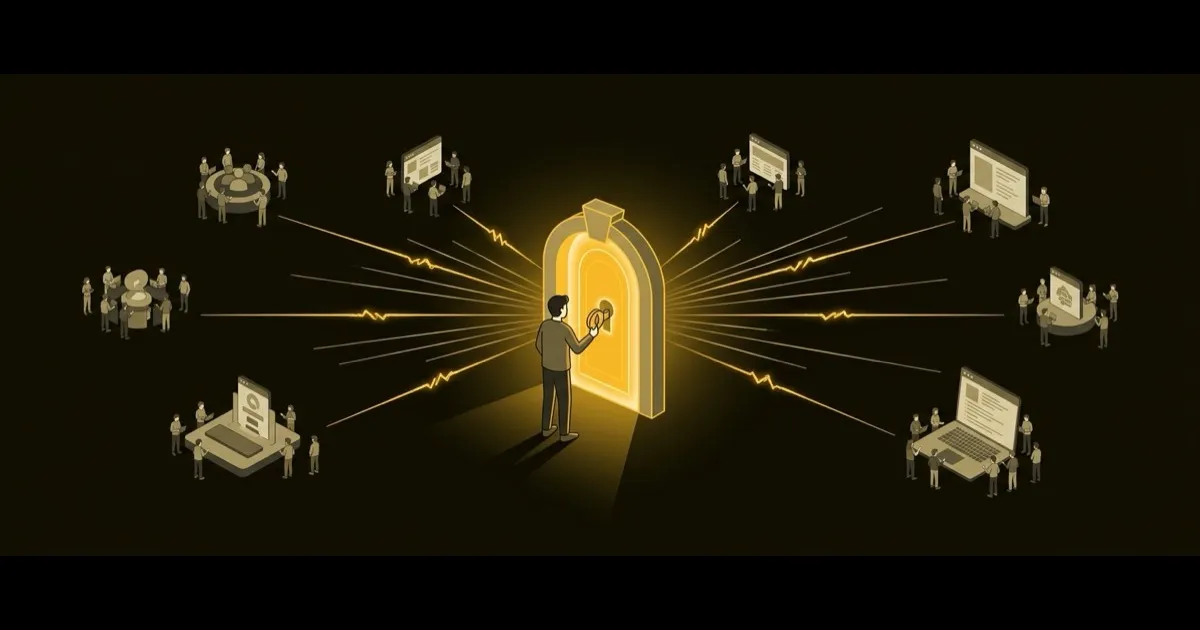
You built an API. The endpoints work, the docs are clean, the SDKs are published. But nobody's making requests. Your dashboard shows a flat line. The problem isn't your API. It's distribution.
The distribution problem for API products
APIs have a unique adoption hurdle: integration cost. A developer doesn't just "try" your API the way they try a new app. They read your docs, evaluate pricing, write integration code, test it, and convince their team it's worth the dependency. That takes hours or days, not minutes. Developers won't integrate an API they found through an ad. They'll integrate one they found through a peer's recommendation, a tutorial that solved their problem, or an open-source project they already use.
Channels that actually work
1. Documentation-led SEO
Your docs are your best distribution channel. Write guides that solve the problems developers search for before they know your API exists. If you built an email API, rank for "how to send transactional emails with Node.js." Screenshot API? Rank for "programmatic website screenshots." ScreenshotOne grew to $12K MRR largely through content targeting the exact queries developers type when they hit the problem his API solves. Publish on your blog, cross-post to DEV Community (dev.to) under tags like #webdev or #api, and syndicate to Hashnode. Every guide should include a working code example using your API, so the reader's fastest path runs through your product.
2. Open-source companion projects
Build a free, open-source tool that's useful on its own but creates a natural on-ramp to your paid API. Resend built React Email, an open-source component library for building emails with React. It's genuinely useful without Resend, but when a developer needs to send those emails in production, Resend is right there. The library hit tens of thousands of GitHub stars and drove significant growth to 400,000+ users. You don't need that scale. An SDK, a CLI tool, or a starter template that uses your API can do the same. List these on Open Source Alternatives (openalternative.co) and relevant awesome-lists.
3. Hacker News (Show HN)
HN remains the highest-signal launch channel for API products. Post as "Show HN: [plain description]" and link to your docs or a live demo, not a marketing page. The audience will evaluate your API surface, pricing, and docs within minutes. A front-page post can drive thousands of qualified signups. Val Town launched through Show HN and kept returning with each major feature, building cumulative awareness. Post Tuesday through Thursday before noon ET. Engage in comments for hours.
4. API directories and marketplaces
Developers search for APIs by use case, and directories serve that intent. RapidAPI Hub, API List (apilist.fun), Public APIs (github.com/public-apis), and DevHunt all drive discovery traffic. If your API serves a specific framework ecosystem, get listed there too: Vercel's marketplace, Supabase integrations, and Netlify's integration hub all funnel developers actively looking for services like yours. Low-effort, compounds over time.
5. Niche subreddits and developer forums
Skip the broad subreddits. The real adoption comes from niche communities where developers discuss the specific problem your API solves. Payments API? r/stripe and r/webdev. Maps API? r/gis and r/openstreetmap. Infrastructure? r/selfhosted (380k+ members) and r/devops. Don't post "I built an API that does X." Answer questions and share code snippets that use your API to solve real problems. Developer Discords (Vercel, Supabase, language-specific servers for Python, Go, Rust) work the same way.
6. Build in public on X
The developer community on X pays attention to founders who share real technical decisions, not "excited to announce" posts. How you designed your rate limiting, why you picked a specific database, what your error format looks like. Resend's founder Bu Kinoshita built a large following by sharing technical decisions, open-source work, and honest metrics. Share code snippets and architecture decisions. Tag the frameworks you integrate with, since those accounts sometimes amplify projects built on their stack.
Common mistakes API product builders make
- Hiding pricing behind a "Contact Sales" wall. Developers need to see a free tier and clear per-request pricing before they'll write integration code. Stripe won the payments space partly because pricing was transparent on day one.
- Launching before docs are solid. You get one shot with most developers. If the quickstart is outdated or takes more than 10 minutes to get a successful API call, they're gone. Ship docs before your landing page.
- Competing on features instead of developer experience. Your API might have 50 endpoints, but if onboarding takes 30 minutes and error messages are cryptic, you'll lose to a competitor with 10 endpoints and a 2-minute quickstart.
- Ignoring the framework ecosystem. If your target developers use Next.js, Rails, or Laravel, and you don't have a first-party integration or tutorial for that framework, you're invisible. Lemon Squeezy gained early traction in the Laravel community by publishing an official Laravel package.
Real examples
Resend was founded by Bu Kinoshita, who first built React Email, an open-source library for building emails with React. React Email gained thousands of GitHub stars on its own merit. When Resend launched the paid API, developers already knew the brand. They grew to 400,000+ users through open-source distribution, technical content, and consistent presence on X and Hacker News. The lesson: build something free and genuinely useful first, then offer the paid service as the natural next step.
ScreenshotOne was built by Dmytro Krasun as a solo developer. He focused almost entirely on SEO content: detailed posts about programmatic screenshots, headless browser automation, and the problems his API solves. Those posts ranked for the queries developers type right before they need a screenshot API. He grew to $12K MRR and 3,700+ active developers without paid ads or a marketing team. The lesson: ranking for the problem you solve is more valuable than any launch event.
Find your distribution channels
Every API product has a different ideal distribution map. It depends on who exactly you're building for and what problem you're solving. The channels that work for a payments API targeting indie devs are different from what works for a data processing API targeting enterprise teams.
Want to find out which channels will work for YOUR API product? Stride's free audit analyzes your product and audience to surface the gaps.