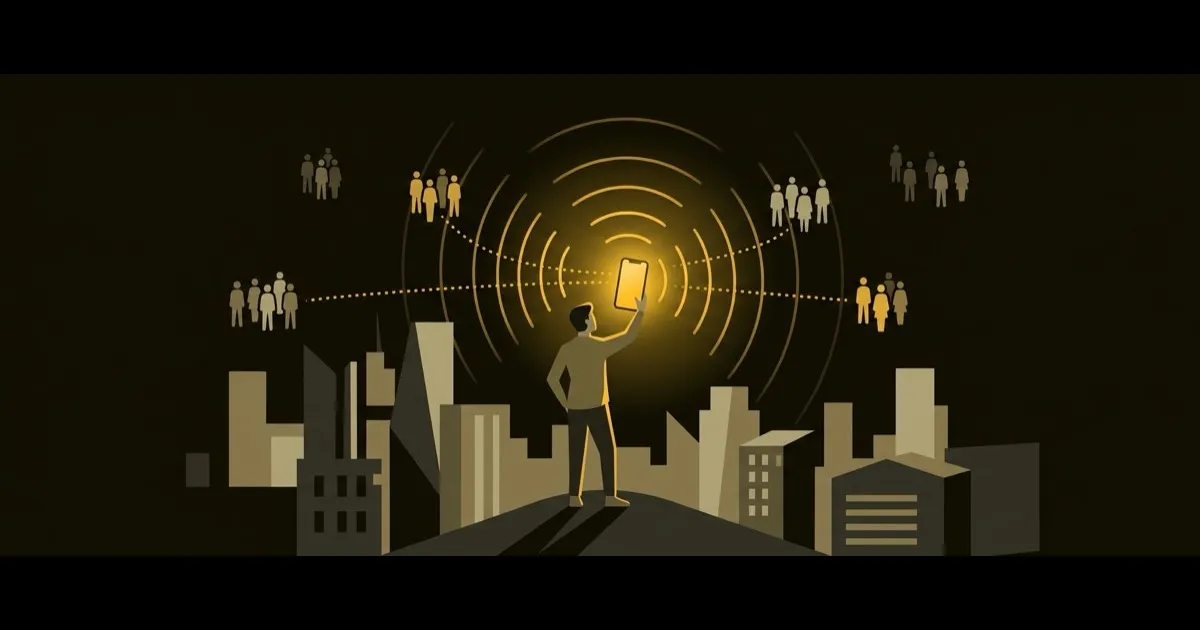
You built a mobile app. It works. You submitted it to the App Store, maybe Google Play too. And now you're watching your download counter sit at single digits while 2 million other apps compete for the same eyeballs.
The distribution problem for mobile apps
App store discovery is broken for indie developers. Apple and Google surface apps that already have traction, so new apps without downloads or ratings are effectively invisible. About 65% of installs come from app store search, but the top results are dominated by incumbents with thousands of reviews. Unlike SaaS where you drive traffic to a landing page, mobile apps add friction: users have to leave what they're doing, open the store, find your app, and tap install. Every step loses people.
Channels that actually work
1. App Store Optimization (ASO)
Your foundation. If your listing isn't optimized, every other channel loses effectiveness. Research keywords with tools like Appfigures or ASOdesk. Put your highest-value keyword in the app title, not just the subtitle. Your first two screenshots should communicate core value in under 3 seconds. Apple lets you submit featuring nominations through App Store Connect for any significant update. Do this every time, with at least 3 weeks of lead time. Indie apps like Carrot Weather and Flighty both earned editorial features this way, driving massive install spikes.
2. Reddit (r/androidapps, r/iosapps, r/AppHookup)
One of the highest-converting free channels for indie apps. Post in r/androidapps or r/iosapps with a genuine "I built this" story explaining the problem you solved. These communities welcome indie developers who share honestly. r/AppHookup works great for limited-time free promotions: temporarily drop your paid app to free, post there, and get a spike of downloads plus reviews. For niche apps, find the subreddit where your users already hang out. A meditation app belongs in r/Meditation, a running tracker in r/running. Lead with the problem, not your app.
3. TikTok and short-form video
The channel most indie developers underestimate. Widgetsmith went from modest downloads to #1 in the App Store after a TikTok walkthrough went viral. The app has since crossed 100 million downloads, entirely from word-of-mouth sharing. You don't need to go viral. Record 30-second screen recordings showing your app solving a specific problem. "POV: you need to [specific task] and this app does it in 3 taps" performs well. The algorithm rewards frequency over production quality.
4. Build shareable moments into the product
Flighty, a flight tracking app built by a 3-person team, generates $500K/month largely through organic sharing. Their "digital passport" feature creates a beautiful visual flight log that users post on social media, which introduces new users naturally. Think about what your app produces that someone would want to screenshot. Fitness apps generate achievement graphics. Finance apps visualize savings milestones. Language apps show streak stats. If your app doesn't produce anything shareable, add it.
5. Product Hunt and app directories
Launch on Product Hunt, but treat it as one data point, not your entire strategy. More importantly, list your app on AlternativeTo (where users search for alternatives to existing apps), BetaList (for early access), and niche directories for your category. Productivity apps belong on SaaSHub. Developer tools belong on Hacker News as a Show HN. These listings compound over time as they accumulate SEO value and keep driving installs months later.
Common mistakes mobile app builders make
- Treating launch day as the finish line. Distribution for mobile apps is a daily habit, not a one-time event. The apps that win keep showing up.
- Ignoring the app store listing. Your icon, screenshots, and first line of description matter more than any feature. Users decide in 3 seconds whether to tap "Get" or scroll past.
- Never submitting for editorial features. Apple has a form in App Store Connect for featuring nominations. Most indie developers never use it. Submit for every significant update.
- Building for other developers instead of end users. Your landing page talks about the tech stack. Your users don't care. They care about what the app does for them.
Real examples
Widgetsmith by David Smith was his 59th app after 12 years of indie iOS development. It launched quietly in 2020, got modest traction, then exploded when a TikTok walkthrough went viral. It hit #1 in the App Store and has crossed 100 million downloads. Smith's takeaway: he shipped consistently and had a polished product ready when the opportunity came.
Flighty by Ryan Jones and a tiny team built a premium flight tracker that now generates $500K/month. They never ran Facebook or TikTok ads. Growth came from obsessive product quality, shareable features like live flight-sharing links, and Apple Search Ads as their only paid channel.
Carrot Weather by solo developer Brian Mueller turned a crowded category into a hit by adding genuine personality and humor. The app earned Apple's App of the Year and coverage from The New York Times, CNN, and Wired. In a saturated category, a distinctive voice and obsessive craft became his distribution advantage.
Find your distribution channels
Every mobile app has a different ideal distribution map. It depends on who exactly you're building for and what problem you're solving. The channels that work for a flight tracking app are different from what works for a meditation timer or a niche productivity tool.
Want to find out which channels will work for YOUR mobile app? Stride's free audit analyzes your product and audience to surface the gaps.