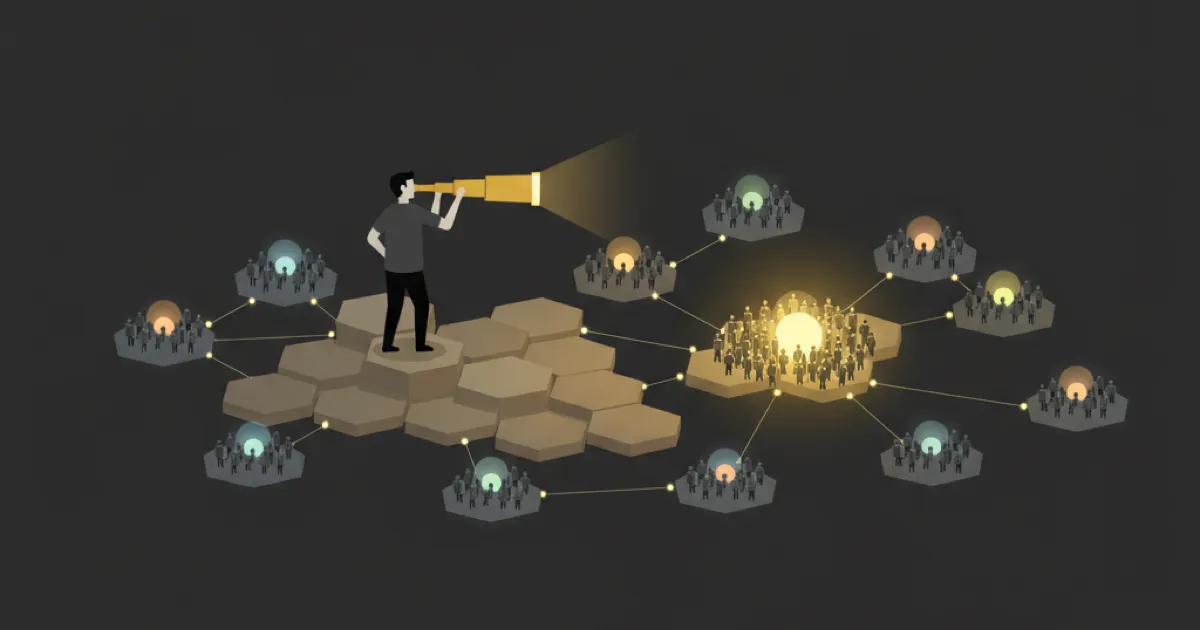
How to Find Your Target Audience as an Indie Builder
Most indie products don't fail because they're bad. They fail because the builder never figured out how to find their target audience. You build something useful, post it on Twitter, get a few likes from other builders, and wonder why nobody's signing up.
The problem isn't your product. It's that you're talking to the wrong people, in the wrong places, with the wrong message.
Here's how to fix that.
Step 1: Start With Who Already Cares
Forget building personas in a spreadsheet. Instead, look at real signals:
- Who's already using your product? Even if it's 5 people, study them. What do they have in common?
- Who engages with your posts? Check your replies, DMs, and mentions. Are they developers? Designers? Small business owners?
- Who's paying for competitors? Go read reviews of similar tools on G2, Product Hunt, or the App Store. The complaints tell you what people actually want.
If you have zero users, look at who's complaining about the problem you solve. Search Reddit, Twitter, and niche forums for the exact frustration your product addresses.
Step 2: Get Specific (Really Specific)
"Small business owners" is not a target audience. "Freelance copywriters who use Notion to manage clients and charge $5K+ per project" is.
The more specific you get, the easier everything becomes:
- Your landing page copy writes itself
- You know exactly which communities to join
- Your content topics become obvious
- Your pricing makes sense
Try filling in this sentence: "I help [specific person] who struggles with [specific problem] by [what your product does]."
If you can't fill that in clearly, you haven't found your target audience yet.
Step 3: Validate With Conversations, Not Surveys
Surveys are where insights go to die. People give you answers they think you want to hear.
Instead, have 10 real conversations. DM people who match your assumed audience and ask:
- "What's the most annoying part of [problem area] for you right now?"
- "How are you currently handling [thing your product does]?"
- "What have you tried before? Why did you stop?"
You're not pitching. You're listening. If 7 out of 10 people describe the exact problem you solve, you've found your audience.
Step 4: Find Where They Actually Hang Out
This is where most indie builders get stuck. You know who your audience is, but you don't know where to reach them.
Common mistakes:
- Posting only on Twitter (where your audience might not be)
- Joining huge subreddits where your posts get buried
- Writing blog posts nobody searches for
Better approach:
- Search for your problem keywords on Reddit. Which subreddits have active discussions? Those are your channels.
- Check niche Slack and Discord communities. Many industries have small, active groups where members actually read posts.
- Look at where competitors get traffic. Use free tools like SimilarWeb to see their top referral sources.
- Test one channel at a time. Spend two weeks showing up consistently in one place before adding another.
Step 5: Match Your Message to Their Language
Once you find your target audience, speak their language. Not your language.
If your users say "I need help getting more clients," don't write copy that says "AI-powered lead generation platform." Use their words. Copy phrases directly from the conversations you had in Step 3.
This alone can double your conversion rate without changing a single feature.
The Ongoing Work
Finding your target audience isn't a one-time exercise. As your product evolves, your audience might shift. Check in every month:
- Are your best users still the same type of person?
- Are new signups coming from unexpected places?
- Is your messaging still resonating?
The builders who win at distribution aren't the ones with the biggest audiences. They're the ones who know exactly who they're talking to and where to find them.
Start With a Reality Check
Want to find out where YOUR users actually are? Try the free Stride audit. It analyzes your product and online presence, then tells you exactly where there's a mismatch between your positioning and your actual audience. Takes 2 minutes, costs nothing.