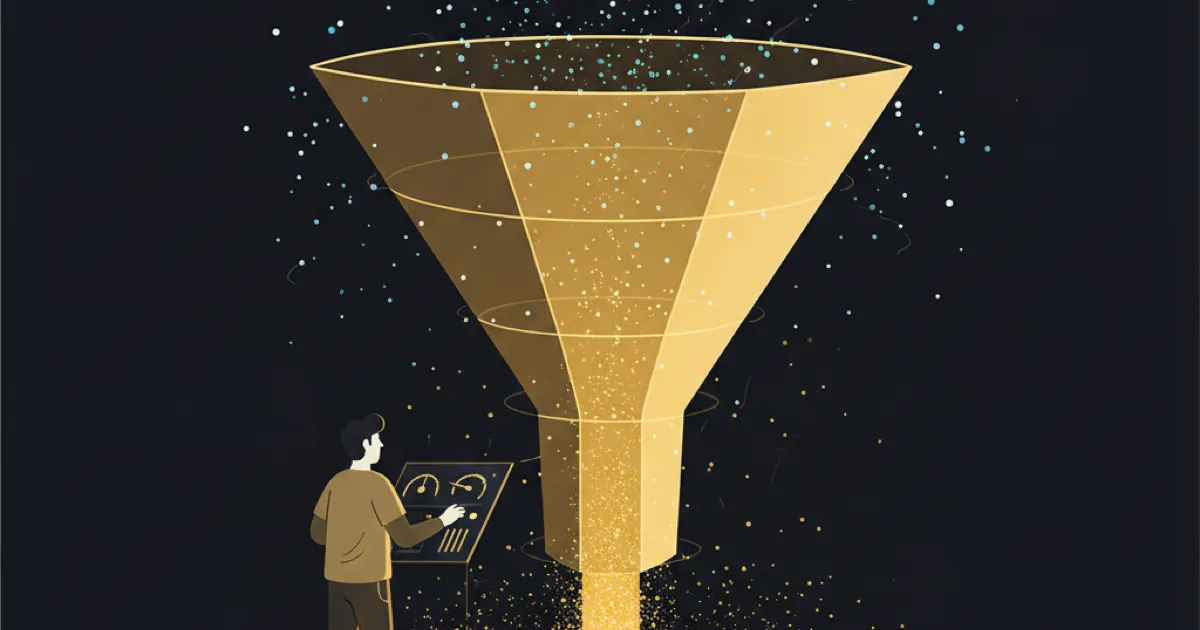
Landing Page Conversion: What Actually Works for Indie Builders
Landing page conversion is the single metric that determines whether your traffic turns into users, customers, or wasted effort. For indie builders, this matters even more. You don't have thousands of visitors to burn through while you optimize. Every visitor counts, and your page needs to do the work.
Here's what actually moves conversion rates when you're building solo.
Start With One Clear Action
The biggest conversion killer on indie landing pages is confusion. Too many CTAs, too many options, too much explanation.
Pick one action you want visitors to take. Sign up, start a trial, buy the thing. Everything on the page should point toward that single action.
- One primary CTA button (repeated 2-3 times as they scroll)
- One headline that states what the product does
- One subheadline that states who it's for
If someone lands on your page and can't figure out what to do within 5 seconds, your landing page conversion rate will stay near zero.
Write a Headline That Passes the "So What" Test
Most indie builder headlines describe the product. "AI-powered task management" or "The modern way to track habits." These say nothing.
A converting headline answers the visitor's real question: what does this do for me?
Weak: "Smart bookmark manager for the web" Better: "Find any bookmark in 2 seconds, even if you saved it months ago"
The second version creates a specific mental image. The visitor immediately knows if this is for them.
Social Proof That Fits Your Stage
You don't need 10,000 customers to show social proof. You need the right proof for your stage:
- Pre-launch: "47 builders on the waitlist" or a tweet from someone excited about the concept
- Early users (1-50): One specific testimonial with a real name and result
- Growing (50-500): User count plus 2-3 short quotes
- Established: Numbers, logos, case studies
Fake social proof or borrowed authority ("as seen on TechCrunch" when it was a comment) kills trust faster than having no proof at all.
Speed and Simplicity Beat Design
A plain page that loads in 1 second will outperform a beautiful page that loads in 4 seconds. Google's data shows that bounce rates increase 32% when page load goes from 1 to 3 seconds.
For indie builders, this means:
- Skip heavy frameworks for your landing page. Static HTML works great.
- Compress images. Use WebP format.
- Host on a CDN (Vercel, Netlify, Firebase Hosting all have free tiers).
- Test your page on a phone with a mediocre connection.
The Form Factor Matters More Than You Think
Every field you add to a signup form cuts your landing page conversion rate. Email-only signups convert 2-3x better than email-plus-password.
If you need more info, collect it after signup. Let people in first, then ask questions.
Track the Right Things
You don't need a complex analytics stack. You need to know three things:
- How many people visit (any analytics tool)
- How many people click your CTA (event tracking)
- How many complete the action (signup, purchase, etc.)
That gives you two conversion rates: click-through and completion. If clicks are low, your copy or positioning is off. If clicks are fine but completions are low, your signup flow has friction.
The Part Most Builders Skip: Traffic Quality
Here's the thing about landing page conversion that nobody talks about enough. If you're sending the wrong people to your page, no amount of optimization will help.
A landing page converting at 2% with qualified traffic beats a page converting at 8% with random visitors. The visitors who convert need to be people who actually have the problem you solve.
This is where most indie builders get stuck. They optimize the page endlessly when the real problem is that they're showing up in the wrong places, talking to the wrong audience.
Fix the Page, Then Fix the Traffic
Get your landing page basics right with the tactics above. Then make sure you're putting it in front of the right people.
Want to find out where YOUR users actually are? Try the free Stride audit