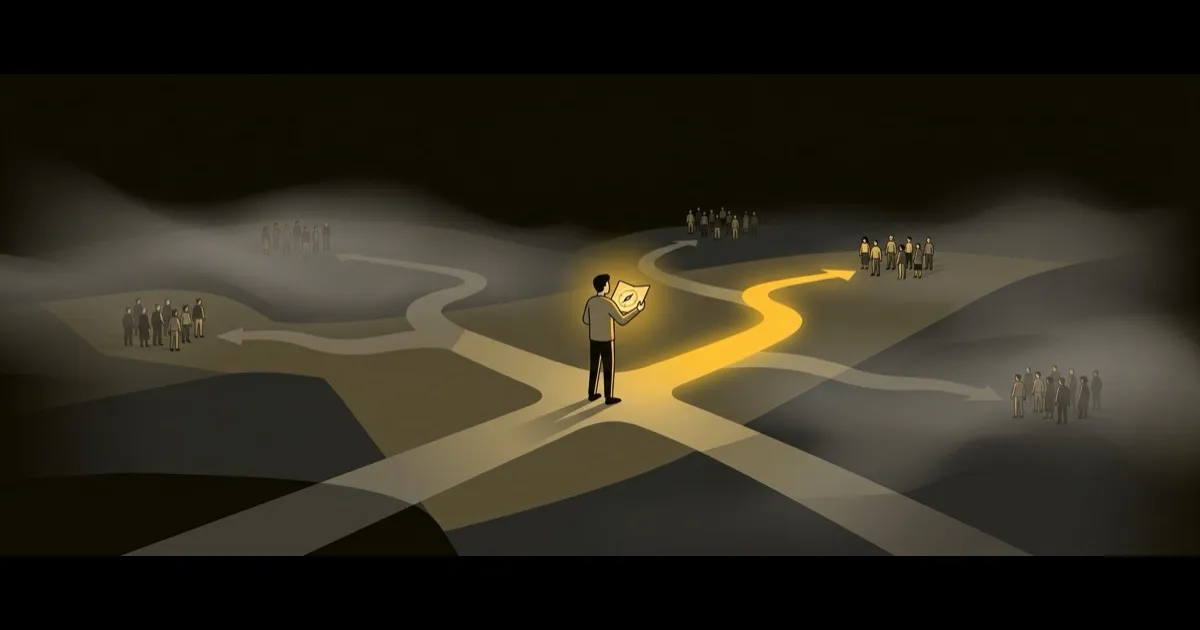
A Product Positioning Framework That Actually Works for Indie Builders
Most product positioning frameworks were built for startups with marketing teams, brand strategists, and six-figure budgets. If you're a solo builder shipping a side project, that advice doesn't translate. You need something simpler, faster, and directly tied to distribution.
Here's a product positioning framework designed specifically for indie builders who need to get noticed without a team behind them.
Why Positioning Matters More When You're Solo
When you have no brand recognition, no ad budget, and no sales team, your positioning does all the heavy lifting. It determines:
- Whether someone stops scrolling when they see your post
- Whether a visitor understands your product in 5 seconds
- Whether the communities you hang out in are actually full of potential users
Bad positioning means you're shouting into the void. Good positioning means the right people find you and instantly get it.
The 5-Part Positioning Framework
1. Who is this for? (Be ruthlessly specific)
Don't say "developers." Say "freelance Rails developers who manage 3+ client projects at once." The narrower your audience, the sharper your message.
Write one sentence: "This is for [specific person] who [specific situation]."
2. What's the trigger moment?
Identify the exact moment someone would search for or need your product. Not a vague pain point. The specific frustration.
- Bad: "They struggle with project management."
- Good: "They just lost track of a client deadline because tasks were spread across Notion, Slack, and email."
The trigger moment tells you where to show up and what words to use.
3. What do you do? (One sentence, no jargon)
Strip away every feature and write what your product does in plain language. If your mom wouldn't understand it, rewrite it.
Template: "[Product] helps [audience] [do specific thing] without [pain they currently deal with]."
Example: "TrackStack helps freelance developers see all client deadlines in one view without switching between five tools."
4. Why not the alternative?
Your competition isn't always another product. Sometimes it's a spreadsheet, a habit, or doing nothing. Name the actual alternative your audience uses today, then articulate why your approach is better for them.
This becomes your key differentiator in landing page copy, tweets, and community posts.
5. Where does your audience already gather?
This is where most frameworks stop and where indie builders actually get stuck. Knowing your positioning means nothing if you're posting in the wrong places.
List 5 specific places your target user hangs out:
- Specific subreddits (not just r/startups)
- Niche X accounts they follow
- Slack or Discord communities
- Newsletters they read
- Conferences or meetups they attend
If you can't name 5, you don't know your audience well enough yet.
Putting the Framework Into Practice
Once you've filled in all five parts, here's how to use them:
For your landing page: Parts 1, 2, and 3 become your hero section. The trigger moment is your headline hook. The one-sentence description is your subhead.
For social posts: Part 2 gives you content ideas. Describe the trigger moment, then introduce your solution. These posts convert because they feel familiar to the reader.
For distribution: Part 5 tells you exactly where to spend your time. Stop posting everywhere. Show up in 2 or 3 places consistently.
For community engagement: Part 4 helps you write comments and replies that position your product naturally. When someone complains about the alternative, you already know what to say.
Common Positioning Mistakes Indie Builders Make
- Too broad: Trying to appeal to everyone means you resonate with no one
- Feature-first: Leading with what it does instead of who it helps and why
- Copying SaaS positioning patterns: Enterprise language like "streamline workflows" or "boost productivity" falls flat in indie communities
- Ignoring distribution fit: Great positioning aimed at an audience you can't reach is wasted effort
Test Your Positioning in 10 Minutes
Post your one-sentence description (Part 3) in a community where your audience hangs out. If people ask follow-up questions or say "I need this," your positioning is working. If you hear crickets, revisit Parts 1 and 2.
A solid product positioning framework isn't a one-time exercise. Revisit it every time you notice your messaging isn't landing or your traffic isn't converting.
Want to find out where YOUR users actually are? Try the free Stride audit