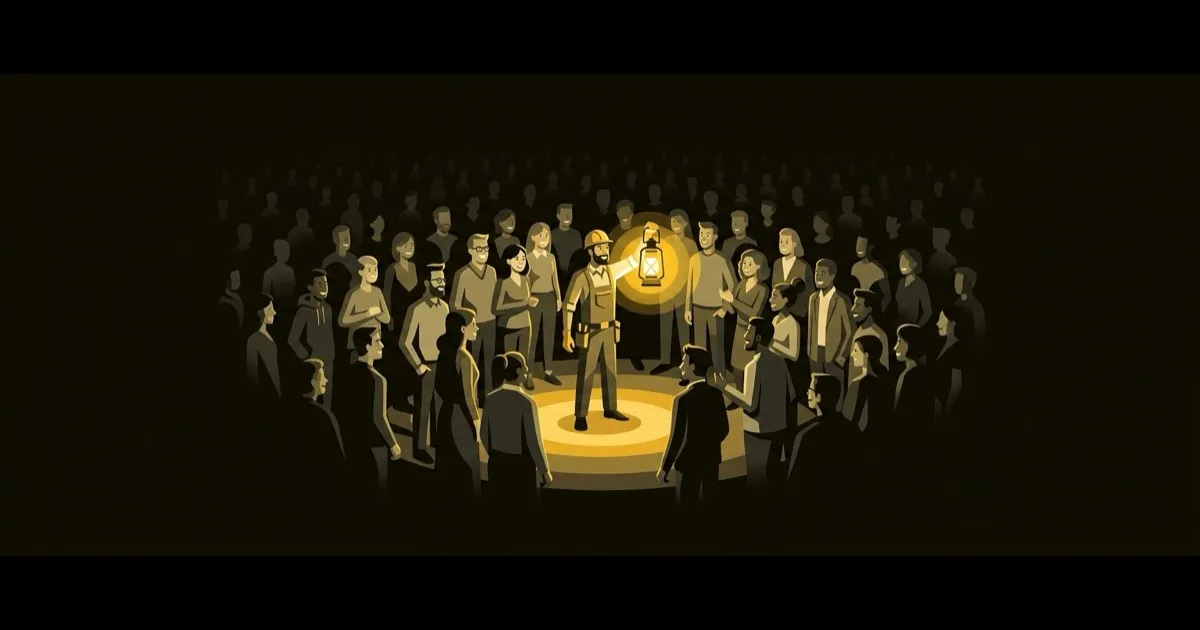
Smallest Viable Audience: How Indie Builders Get Traction Faster
The smallest viable audience is the tightest group of people who can sustain your product. Not your total addressable market. Not "everyone who uses the internet." It's the specific slice of humans whose problem you solve so well that they'll pay, share, and stick around.
Most indie builders fail at distribution because they aim too wide. They write tweets for "founders" or target "small businesses." That's not an audience. That's a census category. Narrowing down feels scary, but it's the fastest path to real traction.
Why Smaller Beats Bigger
When you pick a broad audience, every piece of content competes with thousands of alternatives. When you pick a narrow one, you become the obvious choice.
Here's what happens when you focus:
- Your copy gets specific. Instead of "save time on marketing," you write "post to 3 subreddits daily without getting banned." Specific copy converts.
- Your channels get clear. You stop wondering whether to be on LinkedIn or TikTok. You go where your 200 people already hang out.
- Your feedback loop tightens. Talking to 15 users weekly is possible. Talking to 15,000 isn't.
- Word of mouth actually works. Small groups talk to each other. Broad audiences don't.
How to Find Your Smallest Viable Audience
1. Start with who already cares
Look at your existing users, followers, or waitlist. Who actually engages? Who replied to your launch tweet? Who sent you a DM asking for a feature? That's signal.
If you have zero users, look at who you built the product for. Be honest. If the answer is "myself six months ago," that's a great starting point.
2. Define them in one sentence
A useful format: [Role] who [specific situation] and want [specific outcome].
Examples:
- Solo devs who launched on Product Hunt, got 50 upvotes, and now have no idea how to get users
- Freelance designers who want to sell Figma templates but don't know where to find buyers
- Bootstrapped SaaS founders under $1K MRR who need distribution without a marketing budget
If your sentence includes the word "everyone" or "businesses," it's too broad. Rewrite it.
3. Find where they gather
Your smallest viable audience is already in rooms together. You need to find those rooms.
Check these places:
- Subreddits with under 50K members focused on their specific problem
- Discord servers where they ask questions daily
- X accounts they all follow (look at follower overlap)
- Newsletters they subscribe to
- Indie Hackers or Hacker News threads they comment on
Don't guess. Search. Read 50 posts in a subreddit before deciding if your audience lives there.
4. Validate with conversations, not surveys
DM 10 people who fit your audience definition. Ask what they're struggling with right now. Don't pitch. Listen. If 7 out of 10 describe the problem your product solves, you've found your group.
The Numbers You Actually Need
Here's a rough framework for indie products:
- Info product ($50): 200 buyers = $10K. You need an audience of about 2,000 to convert 10%.
- SaaS ($19/mo): 100 paying users = $1,900 MRR. You need maybe 500 engaged followers.
- Template/tool ($15): 300 sales = $4,500. One viral post in the right community can do this.
You don't need 100K followers. You need the right 500 people to know you exist.
Common Mistakes
- Picking an audience you can't reach. "Fortune 500 CTOs" is a smallest viable audience, but you probably can't get in front of them.
- Changing audiences every week. Give it 30 days of focused effort before pivoting.
- Confusing demographics with audiences. "Men aged 25 to 35" is a demographic. "Solo founders pre-revenue trying to get their first 10 customers" is an audience.
Put This Into Practice
This week, write down your smallest viable audience in one sentence. Find three places they hang out online. Post something useful in each place. Track what gets a response.
The builders who win at distribution aren't louder. They're more focused.
Want to find out where YOUR users actually are? Try the free Stride audit